
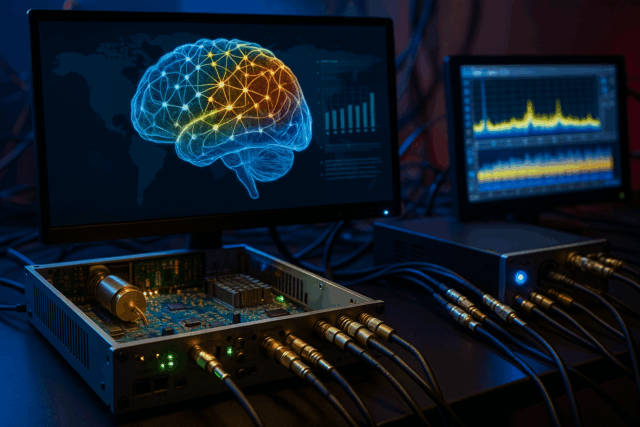
This program equips professionals to design, deploy, and scale AI-powered productivity systems that combine generative AI, RPA, and agentic automation to accelerate delivery and reduce operational friction. Participants learn how to integrate Copilot-class assistants, orchestrate multi-tool workflows, and quantify value with defensible ROI models aligned to business outcomes.
The curriculum blends architectural patterns, prompt and policy engineering, and human-in-the-loop controls that keep teams efficient and accountable.
Cybersecurity is embedded throughout: you’ll implement secure automation pipelines, enforce policy guardrails for AI agents, and apply zero-trust principles to data access, identity, and tool connectivity. You will also assess automation attack surfaces and apply monitoring to detect drift, prompt injection, and misuse so AI-enabled productivity advances without compromising resilience.
Learning Objectives:
- Automate enterprise workflows using AI agents.
- Design and deploy RPA systems integrated with ML/NLP.
- Optimize developer productivity with AI tools.
- Evaluate ROI and total cost for automation initiatives.
- Operationalize human-in-the-loop quality controls and governance.
- Apply secure-by-design practices so automation improves resilience and strengthens cybersecurity across workflows.
Audience:
- Automation Engineers
- Software Developers & DevOps
- Product & Operations Leaders
- Data/ML Practitioners
- IT & Platform Engineers
- Cybersecurity Professionals
Program Modules:
Module 1: AI Productivity Tools
- Calibrate Copilot/ChatOps for code, docs, and support
- Configure role-based prompts, templates, and policies
- Integrate GitHub Copilot with IDEs and CI workflows
- Connect assistants to enterprise knowledge safely
- Measure impact with developer experience metrics
- Govern usage: quotas, telemetry, and model updates
Module 2: RPA & Orchestration
- Map processes for automation readiness and value
- Build resilient bots with retries, idempotency, SLAs
- Orchestrate queues, events, and human approvals
- Integrate RPA with APIs, ESB, and iPaaS connectors
- Handle exceptions, fallbacks, and rollback paths
- Monitor bot health, throughput, and drift signals
Module 3: Agentic Operations Design
- Compose tool-using agents with planning/memory
- Route tasks via policies, skills, and guardrails
- Chain-of-thought vs. constrained reasoning tradeoffs
- Retrieval patterns for secure enterprise contexts
- Safe action execution: limits, verifiers, simulators
- Observability for prompts, actions, and outcomes
Module 4: Measuring AI ROI
- Establish baselines and counterfactuals for impact
- Define value streams and unit economics for AI work
- Time-to-value, adoption, and quality KPIs dashboards
- Cost modeling: inference, infra, and license mix
- Benefit realization plans aligned to OKRs/roadmaps
- Executive reporting and portfolio rationalization
Module 5: Human–Automation Frameworks
- Design RACI and escalation paths for agents
- Human-in-the-loop review, sampling, and sign-off
- UX patterns for assist, suggest, and auto modes
- Change management and enablement playbooks
- Bias, safety, and accessibility considerations
- Incident playbooks for reversibility and fixes
Module 6: Trust, Risk & Controls
- Data minimization, masking, and retention controls
- Identity, secrets, and least-privilege for tools
- Prompt security: injection, exfiltration defenses
- Policy enforcement: content, copyright, compliance
- Monitoring: drift, jailbreaks, anomalous actions
- Audit trails, SBOMs, and vendor risk reviews
Exam Domains:
- Generative Productivity Strategies
- Enterprise RPA Engineering
- Autonomous Task Agents
- Human Oversight & Ethics
- Sector Case Analysis
- Secure Automation Governance
Course Delivery:
The course is delivered through a combination of lectures, interactive discussions, and project-based learning, facilitated by experts in the field of Certified AI-Driven Productivity & Automation Engineer (CAIPAE). Participants will have access to online resources, including readings, case studies, and tools for practical exercises.
Assessment and Certification:
Participants will be assessed through quizzes, assignments, and a capstone project. Upon successful completion of the course, participants will receive a certificate in Certified AI-Driven Productivity & Automation Engineer (CAIPAE).
Question Types:
- Multiple Choice Questions (MCQs)
- Scenario-based Questions
Passing Criteria:
To pass the Certified AI-Driven Productivity & Automation Engineer (CAIPAE) Certification Training exam, candidates must achieve a score of 70% or higher.
Ready to elevate productivity with secure, scalable AI automation? Enroll now and become a CAIPAE by Tonex.